
Acoustic wall panels have become an increasingly popular addition to modern homes. Not only do they add warmth and texture to interior spaces, but they can also help reduce unwanted echoes and improve the way sound travels around a room.
However, simply installing panels on an empty wall doesn’t always deliver the best results. Where you position them can make a significant difference to their effectiveness.
Whether you’re updating a living room, creating a home office or improving the acoustics in a bedroom, understanding where to place acoustic panels will help you get more from your investment.
In this guide, we’ll explore the best locations for acoustic panels, how placement varies between rooms and the common mistakes worth avoiding.
How Do Acoustic Panels Work?
Before deciding where to install acoustic panels, it’s useful to understand what they actually do.
Sound waves travel through a room and bounce off hard surfaces such as walls, windows, ceilings and floors. When these reflections overlap, they can create echoes and reverberation, making conversations and other sounds less clear.
Acoustic panels are designed to absorb some of this reflected sound energy.
Depending on their construction, panels may contain materials such as acoustic felt, mineral wool or other sound-absorbing fibres. These materials help reduce reflections, particularly in the middle and higher frequency ranges.
It’s important to distinguish acoustic treatment from soundproofing.
Acoustic panels primarily improve sound quality within a room. They generally won’t prevent loud neighbours, traffic or other external noises from travelling through walls.
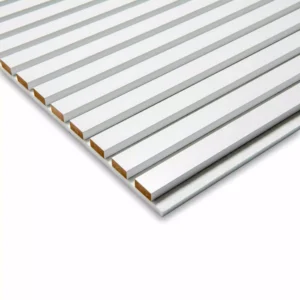
For homeowners looking to reduce echo while introducing a decorative feature, slatted acoustic wall panels can offer a practical combination of appearance and functionality.
Where Are the Best Places to Install Acoustic Panels?
The ideal position depends on your room’s shape, furniture arrangement and main sources of sound.
However, several locations are particularly worth considering.
1. First Reflection Points
First reflection points are the areas where sound initially bounces off a surface before reaching your ears.
For example, when watching television, sound travels directly towards you but also reflects off nearby walls and ceilings.
These reflections can affect the clarity of speech and other audio.
Installing acoustic panels on side walls between the television and seating area may help reduce these unwanted reflections.
One simple way to identify a reflection point is the mirror method.
Sit in your normal listening position and ask someone to move a mirror along the side wall. Wherever you can see a speaker reflected in the mirror is a potential first reflection point.
This technique is particularly useful for home cinemas, music rooms and spaces with dedicated speaker systems.
2. Large Empty Walls
Large, uncovered walls often contribute to noticeable echoes, especially in modern homes with minimalist interiors.
Rooms containing plastered walls, wooden flooring and limited soft furnishings tend to reflect more sound than heavily furnished spaces.
Covering part of a large wall with acoustic panels can help reduce reflections while creating an attractive focal point.
A popular option is to install vertical wood-slat panels behind a sofa, television unit or dining area.
For homeowners interested in decorative options, Irish supplier quietwalls.ie offers acoustic wall panels that can be incorporated into contemporary interior designs.
3. Walls Opposite Sound Sources
Another useful position is the wall directly opposite a significant sound source.
For example, a television positioned against one wall sends sound across the room. Some of that sound reflects off the opposite wall and travels back towards the seating area.
Adding acoustic treatment to this surface can help reduce returning reflections.
This can be particularly beneficial in rectangular rooms where sound repeatedly bounces between two parallel walls.
4. Ceilings
Ceilings are sometimes overlooked when planning acoustic improvements.
However, sound also reflects between the floor and ceiling, particularly in rooms with hard flooring or unusually high ceilings.
Specialist acoustic ceiling panels can reduce these reflections.
They are commonly used in open-plan living areas, offices and dining spaces where wall treatments alone may not provide enough absorption.
Ceiling installations require suitable products and secure fixings, so it’s important to check that any panels are approved for overhead use.
5. Room Corners
Corners can contribute to uneven sound, particularly at lower frequencies.
In rooms used for music production or home cinema systems, low-frequency energy may accumulate around room boundaries.
Specialist bass traps are generally more suitable for dealing with these problems than thin decorative wall panels.
For everyday residential spaces, however, treating large reflective walls is often a more useful starting point than concentrating on corners.
Where to Place Acoustic Panels in Different Rooms
Each room presents different acoustic challenges, so placement should reflect how the space is used.
Living Rooms
Living rooms are among the most popular spaces for acoustic wall panels.
Televisions, music systems, conversations and hard flooring can all contribute to sound reflections.
Some effective locations include:
- Behind the television or entertainment unit
- On walls beside the main seating area
- Behind the sofa, particularly when it faces a large uncovered wall
- On large feature walls in open-plan spaces
Installing decorative slatted panels behind a television can create an attractive backdrop while potentially improving the room’s acoustic comfort.
However, the most effective location will depend on the actual sound reflections rather than appearance alone.
Bedrooms
Bedrooms typically contain more soft furnishings than other rooms.
Beds, carpets, curtains and upholstered furniture naturally absorb some sound, meaning extensive acoustic treatment may not be necessary.
Nevertheless, rooms with wooden floors or minimal furnishings can still experience unwanted reverberation.
The wall behind the headboard is a popular location for decorative acoustic panels.
Floor-to-ceiling wood-slat panels can introduce warmth and texture, creating a comfortable feature wall.
When improving acoustics is the main priority, it’s also worth considering exposed walls opposite the bed.
Home Offices
With remote and hybrid working now common, home offices have become another popular location for acoustic panels.
A room with bare walls and laminate flooring can create a noticeable echo during video calls.
This is particularly problematic when using microphones, as excessive reverberation can make speech sound distant or unclear.
Useful positions include the wall behind the desk, nearby side walls and surfaces facing the main speaking position.
If you regularly participate in online meetings, test the room by recording a short voice clip before and after installing panels.
This gives you a simple way to assess whether the treatment has improved clarity.
Dining Rooms and Open-Plan Kitchens
Modern kitchens and dining areas often combine several highly reflective materials.
Tiles, glass, painted walls and hard worktops can create lively acoustic environments, particularly when several people are talking.
In an open-plan room, sound can travel between cooking, dining and living areas without encountering many absorbent surfaces.
Installing acoustic panels on available walls near dining areas may help control some of this reverberation.
Decorative wood-effect panels can also help visually define different zones within a large open-plan space.
Where space allows, combining wall panels with rugs, curtains and upholstered dining chairs may provide additional benefits.